
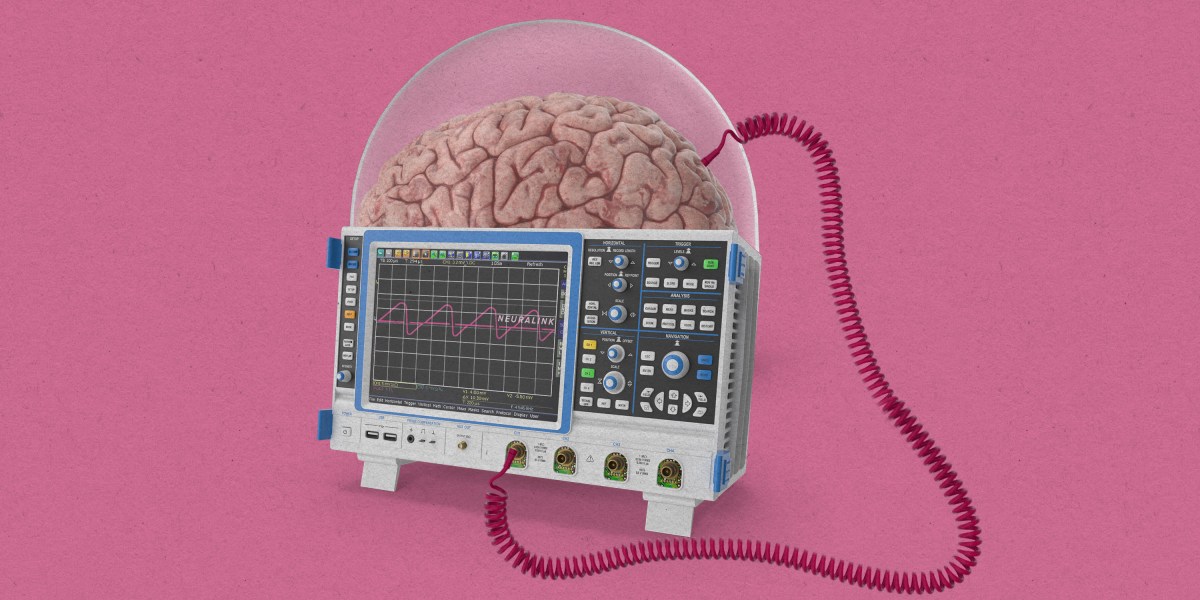
Last week, Elon Musk made the bold assertion that sticking electrodes in people’s heads is going to lead to a huge increase in the rate of data transfer out of, and into, human brains.
The occasion of Musk’s post was the announcement by Neuralink, his brain-computer interface company, that it was officially seeking the first volunteer to receive an implant that contains more than twice the number of electrodes than previous versions to collect more data from more nerve cells.
The entrepreneur mentioned a long-term goal of vastly increasing “bandwidth” between people, or people and machines, by a factor of 1,000 or more. But what does he mean, and is it even possible? Read the full story.
—Antonio Regalado
This story is from The Checkup, MIT Technology Review’s weekly biotech newsletter.